Learn About Our Services

Elsie Isn’t Afraid of Matt Anymore

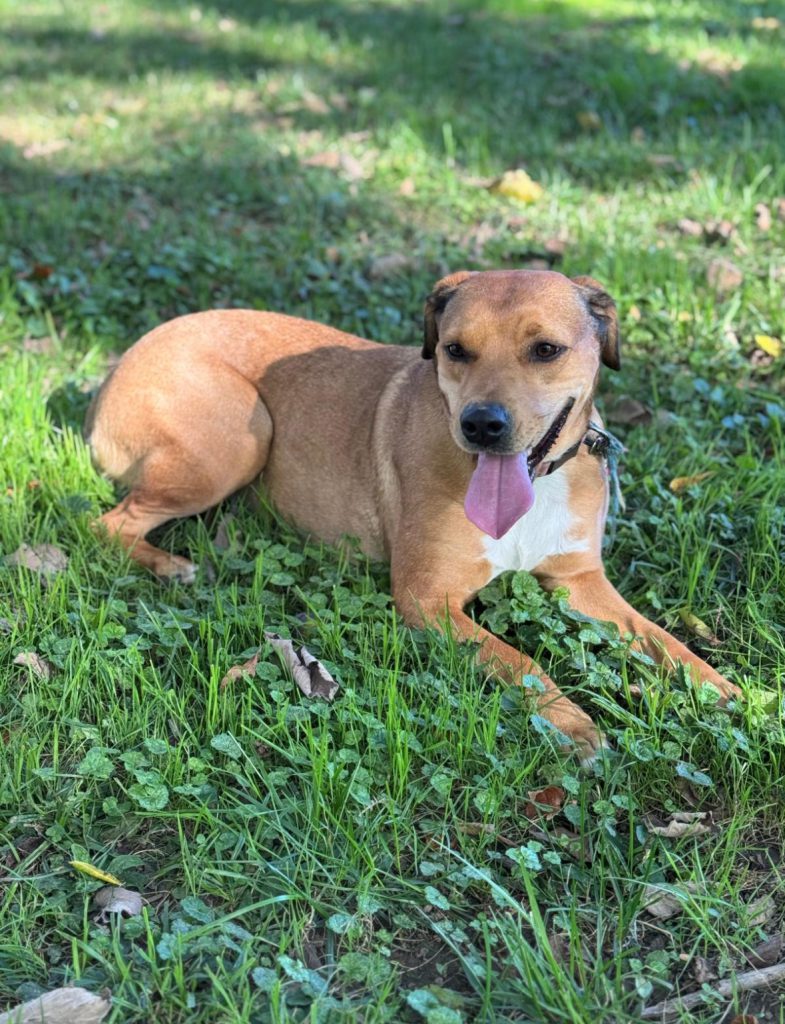
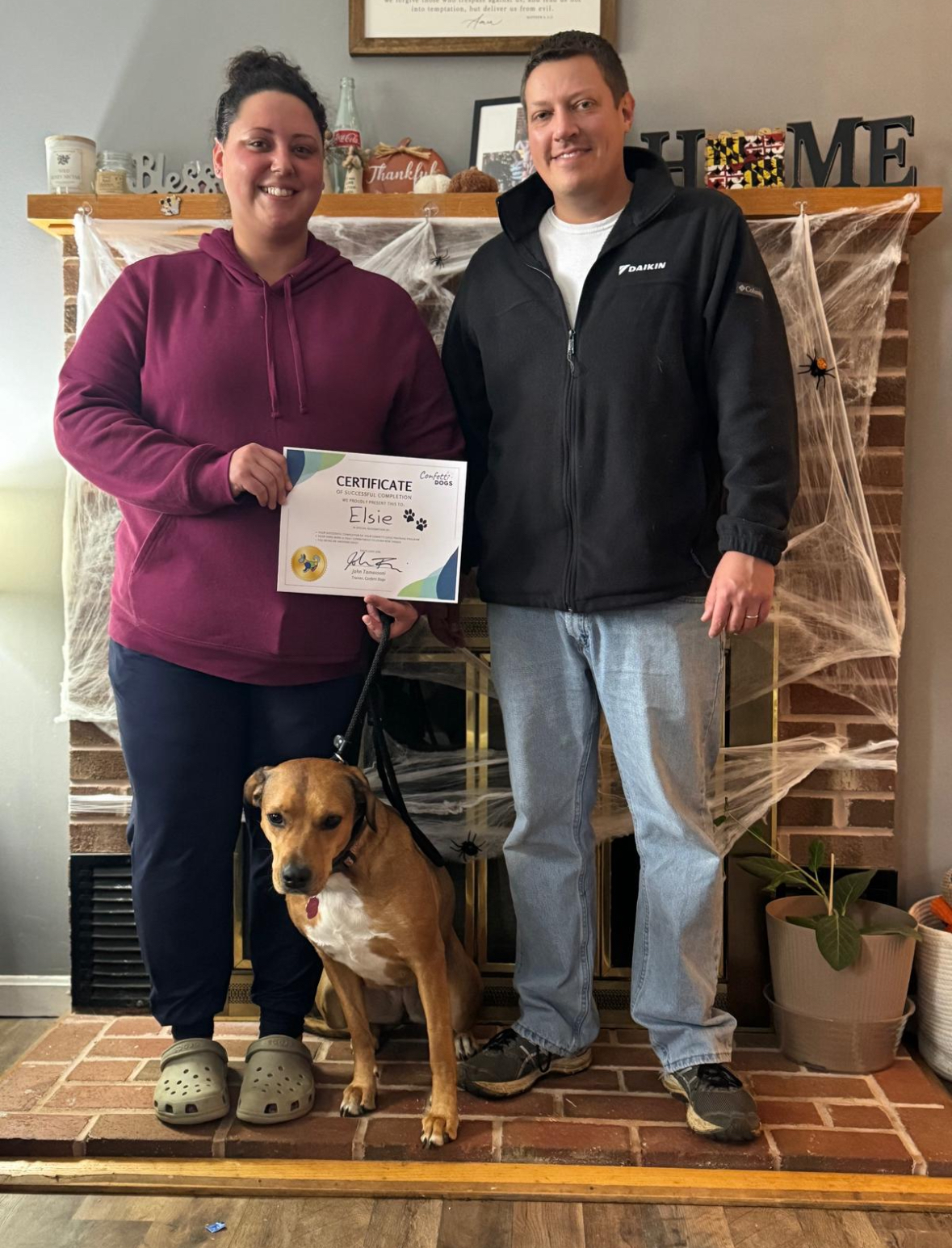
When I first met Elsie, a rescue dog, she was a dog who clearly had deeply rooted fear of men (and specifically my client Matt) and other scenarios...that at times caused unsafe and erratic responses, but were also impacting her daily well-being. We wanted to build her confidence, build trust between her and Matt, and open her world a bit!

John

Owner/Trainer
John is a former high school teacher turned professional dog trainer who founded Confetti Dogs after nearly a decade of hands-on experience with dogs and their people. Inspired by his first rescue dog, Fonso, his current dogs, and his childhood dog Tiffy…John is passionate about helping families build calmer, safer, and more connected lives with their pets.
Learn more about John

The Challenge

Matt and Taylor came to me because their rescue dog, Elsie, was struggling with deeply patterned fears—especially around Matt and men in general—even though she felt at ease with Taylor, the kids, and in her backyard. Before training, Elsie couldn’t walk next to Matt, use the bathroom near him, take food or treats from his hand, approach a food bowl he set down, or stay in the same room without skittishly fleeing, freezing, growling, or needing significant space. Getting her inside from the yard was also difficult because it had become her sanctuary, making it clear just how overwhelmed she felt in everyday moments.

The Approach

To build Elsie’s bravery and confidence, we focused on three creative strategies: gradually strengthening her bond with Matt through shared “journey/adventure” time on long-line walks that gave her space to build confidence while activating her nose to better understand her environment in Matt’s presence; thoughtfully encouraging her whenever her body language showed de-escalation, calming signals, or softening tension; and eventually counter-conditioning Matt’s presence inside the home once she was consistently calm enough to take treats from him. We also used Taylor’s and the kids’ praise and affection as powerful, well-timed rewards whenever Elsie made brave choices around Matt. In fear-based cases like hers, in moments where you observe signs of bravery and/or de-escalation...rewarding a dog with relief and/or space from the scary thing, can actually be one of the most meaningful positive reinforcers there ever was.

Trainer's Perspective

Helping families with dogs who are extremely fearful is one of my passions. I am always up-front with these clients, describing what realistic/hopeful results may look like for their unique situation. We can’t just snap our fingers and BAM… the dog is confident in all situations! These clients always understand that, but still want to do their very best to help their dog as much as possible.

DISTINGUISHING BETWEEN “COMMON FEAR” vs. “DEBILITATING FEAR”:

I also want to take a moment here to distinguish between fear vs. what I would describe as “debilitating fear.” Both of these are often contextual. Even extremely fearful dogs can still show signs of enjoyment and interest in certain contexts, activities, or spaces.

“COMMON FEAR”:

Many dogs, even very confident dogs, have contextual fears where they show short-lived and sometimes even somewhat patterned fear responses in daily life. A couple of simple examples that come to mind:

  • a dog who is afraid of getting a bath, but eventually, with some food rewards, a lickmat, or other encouragement, is able to get it done and feel clean even without much intentional scaffolded training… but really just by pure desensitization and developing normalcy.
  • dogs with quick, skittish, escape-like responses when something falls down somewhat near them or makes a loud noise near them… YET they can pretty quickly, even with some skepticism/hesitation, bounce back from it, accepting encouragement, treats, praise, and possibly checking in with their owner in a very focused way, etc.
  • a dog who has never walked on a dock before, has nervous and hesitant body language/stress signals, but with a little bit of guidance/treats/encouragement, the dog is happily on the dock with their family, etc.

“DEBILITATING FEAR”:

Debilitating fear, as I observe it, is also often contextual as well… but it is a fear that creates huge barriers in their lives for everyday well-being. Elsie and some other dogs I have worked with fall into this category. It’s important to note here, again, that Elsie, even before training, still had contexts where she showed much more confidence and joy (with the children, with Taylor, in the backyard, chasing prey, etc.), but the things she was afraid of really did affect her well-being and overall movement forward. Some examples of debilitating fear might be:

  • frozenness/ongoing trembling/body shutting down in certain contexts
  • panicked responses/ongoing escape-like behaviors/erratic pacing
  • not being able to regularly eat food or take water due to the fear being so profound
  • not being able to use the bathroom
  • not being able to get to a vet office (for well-being reasons) due to overwhelming fear of getting into a car, etc.

Some memorable moments from Elsie’s program were when they would send me pictures or videos of big moments of progress for Elsie (Elsie taking food out of Matt’s hand, Matt being able to patiently help Elsie go onto a raised dog bed, the first time Elsie chose to stay near Matt on the couch even after Taylor left the room, etc… simple things that many people would see as normal, but for this family they were big moments to celebrate!). One of my favorite moments was being on the first long-line walk with Matt and Elsie, and we noticed 5–10 minutes into the walk that she was finally starting to truly activate her nose around Matt, around the trees, around me, etc. Whenever a dog’s nose is activated, that means their brain is open to receiving new information… which is exactly what we needed Elsie to begin doing!

Some challenges from this program that I remember were making sure we scaffolded properly to maintain about an 80% success rate with Matt being present. Scaffolding involves really carefully thinking about adding certain movements, approach angles, sounds, speed, tonality, spacing, etc. These are details that, for a dog like Elsie, we need her to see and learn… but there were a few times where I reflected and thought I needed to scaffold differently to keep her success rate higher!

Something else I want to mention here as a defense for these dogs: there are trainers who will see a case like Elsie’s simply from an obedience standpoint and will default to using high leash pressure or an e-collar to basically make her stay in the room when Matt’s present, or make her walk slowly instead of erratically, etc. All this does is make a dog like Elsie “mask” their fears and just go along with it because it’s “obedience.” Have your guard up for this kind of approach… this is never a good approach, as it sacrifices trust and reliability of the relationship you have with your dog. If you or someone you know has a dog with “debilitating fears,” you should always go the longer, more patient route of providing safety and security first… then working on de-escalation and journeying, then building bridges in their world from there.

That’s what we did with Elsie, and I’ll continue to support them as time goes on during their long-term support phase and beyond!

The Results

With our help along with the whole family's involvement, Matt has done an amazing job of patiently allowing Elsie's relationship with him to grow more secure. As simple as it seems to many reading this, but incredibly difficult for Elsie early on...she can now go to the bathroom when Matt is near her on walks, and is also able to eat treats directly from Matt's hand and nearby him. FUN FACT: The first time she at some turkey from his hand was a big moment of celebration for the family! Inside the house, she is now far more comfortable sitting near Matt on the couch or staying in the room when he comes in. She also is able to eat from her food bowl much more comfortably and begin sooner, than before when Matt is present in the kitchen or if he has put the bowl down for her. Also, we developed some improved management protocols and creative solutions for getting her to come in from the backyard!

What's Next

In the coming months, Matt will need to keep showing Elsie, even during normal day to day routines, that time with him—and simply being in his presence—almost always leads to freedom, access, activity, good food, and adventure. All of these experiences are forms of counter-conditioning that gradually shift her physiological response toward something more positive or neutral whenever she is with or near Matt. Continuing their well-rehearsed long-line adventures and nose-activation walks will be essential to long-term success. Matt and the family will also need to be continuously scaffolding the drills we practiced in which he would enter different rooms and the family would celebrate Elsie for choosing calmness instead of fleeing erratically with growling, or barking, etc. Taylor, Matt's wife, and the kids have been such a great support for Matt and Elsie in training. With multiple kids and a busy household, it’s no small task to help a dog work through such deeply rooted fears, and so I just want to say how incredibly proud I am of Matt and Taylor for their commitment and the progress they’ve made with Elsie!

Here's what Taylor had to say:

John is the most patient, kind, thorough, and incredible trainer we could have asked for. We rescued a dog that is petrified of nearly everything, particularly men. We had gotten to where we just didn’t know what else to do. After just 5 training sessions with John our dog will walk on a leash with my husband, loves jumping in creeks and exploring, will accept a treat from some men and strangers. He has taught us so many simple techniques that are so easy to incorporate into our everyday lives.

Our dog has become so much more confident and relaxed in such a short time and we are so thankful to have used Confetti Dogs!

~ Taylor

We're here to help.

Training your dog well is one of the most rewarding things you can do for your dog's long term quality of life — and your's. We do this every day. Schedule and let's discuss how we can make a difference for you and your pup.
Book an Intro Call Now